
Crane & Crane Rigging Services in Eastern North Carolina
Did you know?
- Removing large trees close to your home using a crane is not only safer but 50% faster than traditional methods?
- This is because cranes allow us to lift and remove large sections of the tree in a controlled manner, even in tight or hard-to-reach areas.
- With this method, we avoid the risk of large limbs falling unpredictably and potentially damaging nearby structures like fences, sheds, or power lines.
- Our expert crane operators and rigging specialists ensure a seamless, efficient tree removal process that prioritizes your property’s safety.

- We assess the size and location of the tree to determine if our crane services are needed.
- This is especially important for trees near power lines, buildings, or other hazards.
- We set up the crane in a secure position and rig the tree using ropes and harnesses to lift large sections safely.
- Our crane operator and riggers work together to cut the tree in sections, lifting each piece away from the area safely.
- We use guide ropes to ensure that each section is placed precisely where needed, avoiding damage to surrounding structures.
- After lifting and cutting down the tree, we transport it to a safe location for further processing.
- Once all of our tree work is completed, we will clean up the area and ensure a nice, clean area with minimal to no impact.
Ready to get great service?
Crane and Rigging for tree services
Removing Large or Mature Trees

- Tree Height and Size: Trees that are exceptionally tall (over 50 feet) or have large canopies can be difficult or dangerous to cut down using traditional methods. A crane allows us to remove these trees in sections, rather than felling the entire tree at once.
- Example: A mature oak tree standing 80 feet tall, with a trunk diameter of 3-4 feet, can weigh several tons. A crane is used to lift and remove the tree in segments, reducing the risk of property damage or injury.
- Precise Removal: In densely populated residential areas, it's crucial to avoid damaging nearby homes, fences, or power lines. A crane enables us to safely lift sections of the tree away from the property without causing damage to structures or landscaping.
Hazardous Tree Removal (Leaning or Dead Trees)
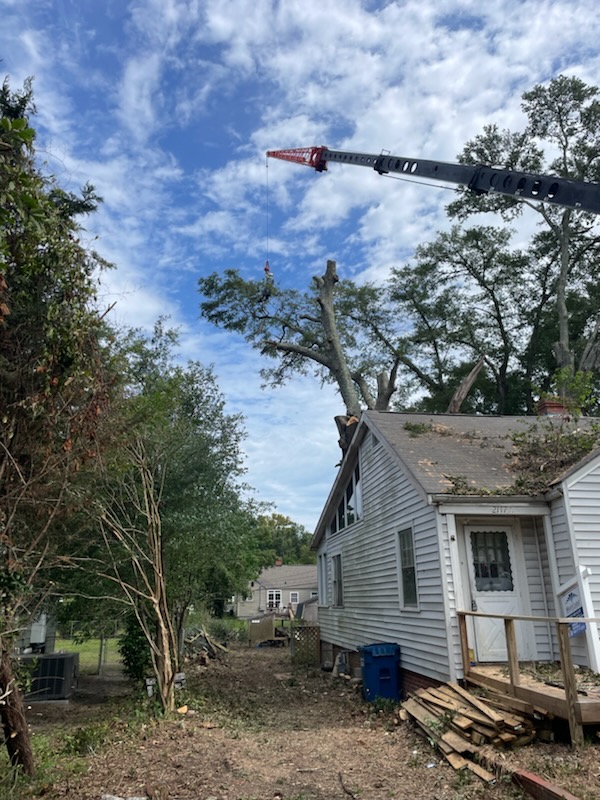
- Tree Condition: Trees that are diseased, dead, or heavily leaning are prone to unpredictable falls, making traditional cutting dangerous. Crane services allow us to stabilize the tree and control the removal process.
- Dead or Decayed Trees: When a tree is dead or decayed from the inside, it can be structurally unsound, making it too risky to climb or cut without support. A crane can be used to lift and remove these unstable sections safely.
- Leaning Trees: Trees that are leaning due to storm damage, soil erosion, or improper growth may not fall in the intended direction. A crane eliminates this risk by allowing us to lift the tree directly, instead of relying on gravity to fell it.
Accessing Difficult or Confined Areas
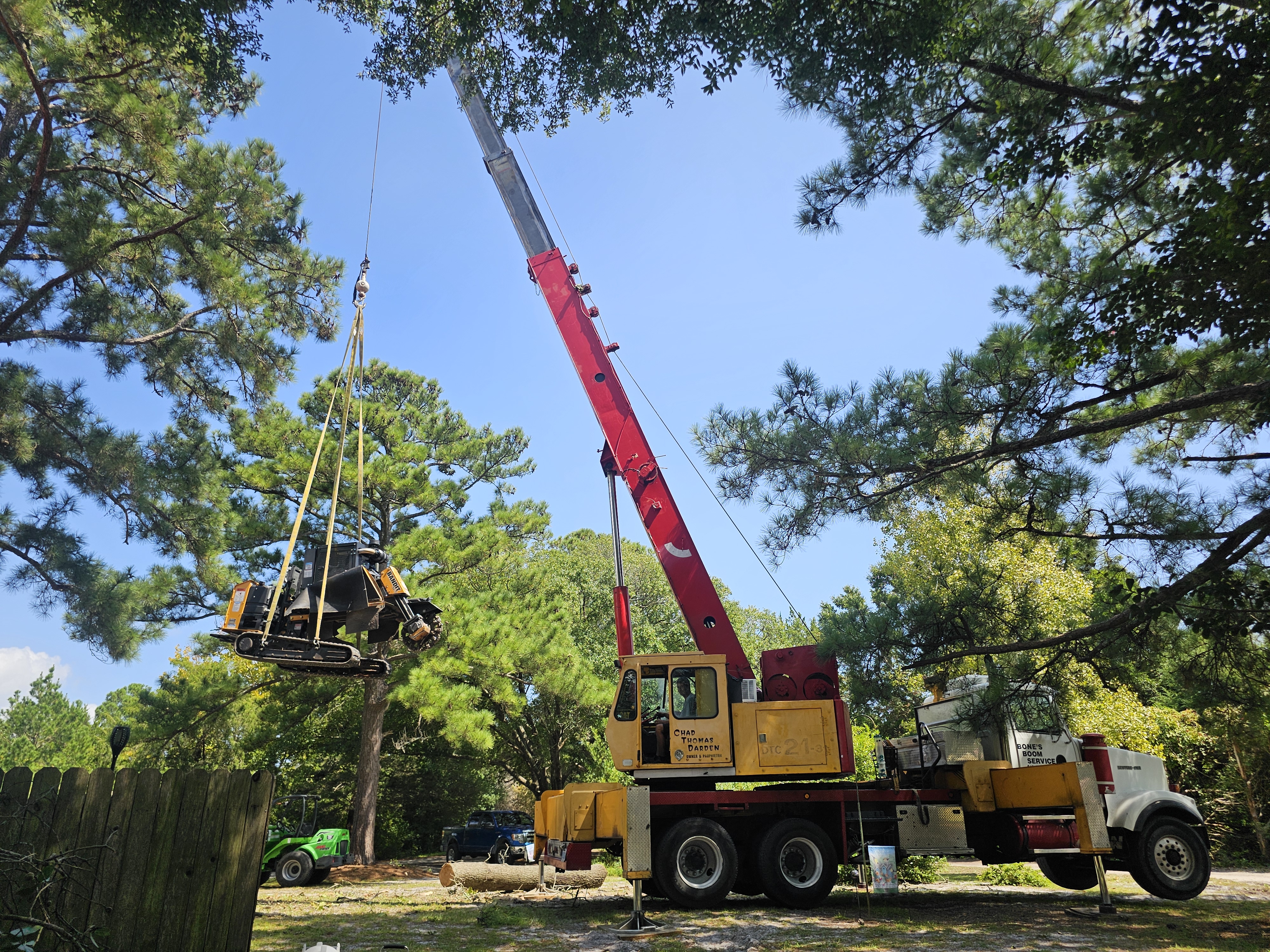
- Tight Urban Spaces: In urban environments, trees may be located in confined spaces between buildings or next to infrastructure, making traditional tree removal impractical. Cranes provide vertical access to these trees.
- Example: A tree growing in a backyard with no access for heavy machinery. A crane can be positioned on the street, lifting tree sections over the house and out of the backyard without needing ground access.
- Steep Slopes or Hillsides: Trees growing on steep inclines or hillsides present unique challenges. Climbing or using standard equipment on these terrains is unsafe. A crane allows us to reach trees on unstable ground and lift them safely.
- Example: On a hillside property where a tree needs removal, a crane can access the tree from flat ground and lift it over the slope without risk to the climber or property.
Post-Storm Cleanup (Fallen Trees)

- Removing Large Fallen Trees: After a storm, large trees may be knocked over or broken. Removing these trees with standard equipment can be dangerous due to their size, weight, or unstable positioning. A crane is used to safely lift fallen tree sections and prevent further damage.
- Example: After a hurricane, a 60-foot pine tree has fallen across a house and garage. A crane is deployed to lift sections of the tree off the structures without further damaging the property.
- Storm-Damaged Trees: Sometimes trees remain standing after a storm but are severely damaged, with broken limbs hanging on by a thread. Cranes help lift these large, dangerous limbs without risking a climber’s safety.
Precision Limb Removal
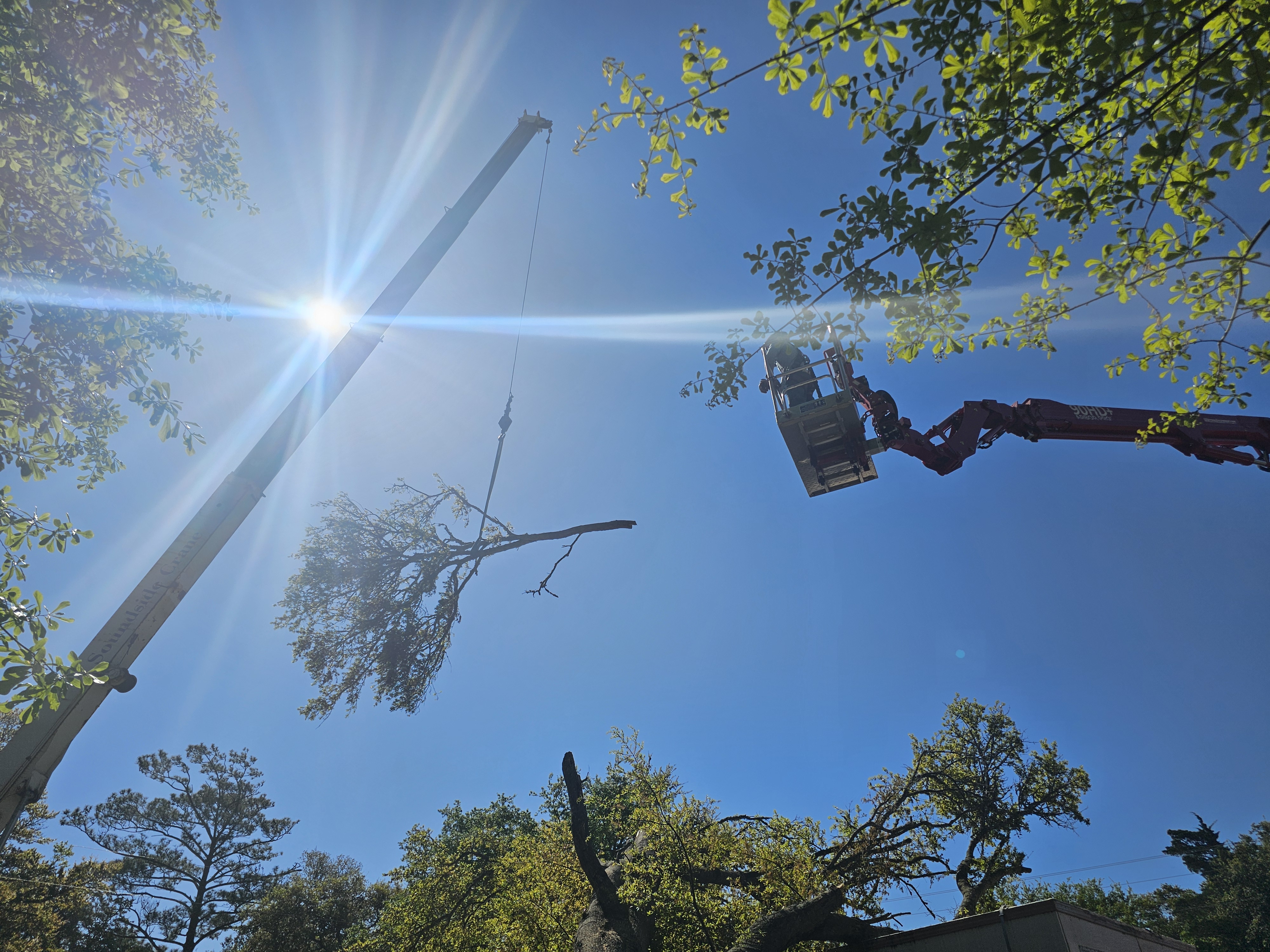
- Reducing Impact: When large limbs need to be removed over valuable structures like patios, swimming pools, or driveways, a crane allows for precise, controlled lowering of the branches.
- Example: A large maple tree has branches extending over a client’s swimming pool. Instead of letting the branches fall, we use a crane to lift and remove each branch, preventing damage to the pool deck or landscaping.
Ready to get great service?
We Perform Crane and Rigging Services
in theses areas:
here's some answers to our frequently asked questions
Answer: There are several signs that a tree may need to be removed. These include significant leaning, large or numerous dead branches, damage to the trunk, signs of disease, or its proximity to structures or power lines. Our professional arborists can conduct an on-site assessment to determine whether a tree should be removed or if it can be saved with proper care.
Answer: For most trees, late winter or early spring, just before the tree starts to bud, is the ideal time for pruning. During this time, trees are in their dormant phase, which reduces stress and allows for vigorous growth in the spring. However, the best time can vary depending on the tree species and specific health concerns, so it's always a good idea to consult with a professional.
Answer: Cabling and bracing are methods used to provide structural support to trees that have weak limbs or that are at risk of breaking. Cabling involves installing steel cables between major limbs to strengthen the tree and limit branch movement. Bracing involves inserting rods to provide additional support. These methods can extend the life of the tree and reduce the risk of property damage or injuries.
Answer: We generally recommend an annual inspection for your trees. However, this can vary depending on the tree species, age, size, and overall health. More frequent inspections may be necessary for trees that are older, showing signs of disease, or exposed to extreme weather conditions.
Answer: Stump grinding is a process that uses a specialized machine to chip away the wood of a stump until it is below ground level. It is often necessary because leftover stumps can be hazardous, unsightly, and take up valuable space. Moreover, stumps can become a home for pests or diseases that can spread to other plants in your landscape.
Answer: Yes, we provide comprehensive storm damage recovery services. These include 24/7 emergency response, damage assessment, safe tree removal, debris cleanup, tree pruning, and tree replacement. Our goal is to help restore your landscape to its pre-storm condition as much as possible and to reduce further risks to your property.
Answer: There are several factors to consider when choosing a new tree. These include the tree’s size at maturity, its soil and sunlight requirements, its tolerance to local pests and diseases, and its compatibility with your landscape's existing plants. Our tree planting service includes consultation on tree species selection to ensure you make the best choice for your landscape.
Answer: Mulching involves applying a layer of material (such as wood chips, leaves, or compost) around the base of your trees. It serves several purposes: it helps retain soil moisture, suppress weeds, regulate soil temperature, and improve soil nutrition. It also gives your landscape a clean, finished appearance.
Answer: Brush and underbrush can make your property look unkempt, but they also have more significant drawbacks. They can provide a habitat for pests, impede the growth of preferred plants, increase the risk of fire, and obscure hazards like stumps or uneven ground. Our brush and underbrush removal services help maintain the health and aesthetics of your landscape.
Answer: Yes, we offer tree transplanting services. Transplanting a tree involves carefully digging it up, preserving as much of the root system as possible, and then replanting it in a new location. This process can be complex and requires professional expertise to ensure the tree's survival. It's important to note that the success rate can vary depending on the tree species, its age, and its overall health.
Answer: Some common signs of a diseased or dying tree include discolored or wilting leaves, dead branches, fungal growth, peeling bark, holes or cracks in the trunk, and reduced growth. If you notice any of these symptoms in your trees, our professional arborists can provide an accurate diagnosis and recommend an appropriate treatment plan.
Answer: Tree trimming and removal can be dangerous tasks that require professional training and equipment. Mistakes can result in injury, property damage, or harm to the tree itself. We strongly recommend hiring professional arborists, like our team, to handle these services safely and effectively.
Answer: This can depend on factors such as the type of grass you have, the season, and the desired health and appearance of your lawn. Generally, mowing every one to two weeks is recommended during the growing season. Our team provides customized lawn care services and can offer specific advice for your yard.
Answer: During a tree health assessment, our arborists will thoroughly inspect the tree, including its branches, leaves, bark, and roots. We'll look for signs of disease, pest infestations, structural issues, or other problems. After the assessment, we can recommend treatment options or maintenance practices to improve the tree's health and longevity.
Answer: We understand the urgency of tree emergencies and offer 24/7 emergency services. Our team is always on standby and will respond as quickly as possible to help mitigate risks and address your tree-related emergencies.
Answer: Land grading is the process of leveling the ground for construction, landscaping, or drainage improvements. Proper grading can prevent water damage to your property, improve the health of your lawn and gardens, and create a more usable space. Our team has the expertise and equipment to perform land grading services efficiently and effectively.
Answer: Mulching in the spring helps to suppress weeds, retain soil moisture, and regulate soil temperature during the summer. Mulching in the fall helps to protect plant roots from the winter cold and adds nutrients to the soil for the next growing season. Our mulching services can help keep your landscape healthy and attractive year-round.
Answer: If a tree falls during a storm, it's important to stay away from it, especially if it's entangled with power lines. Contact our emergency tree service immediately. We'll arrive promptly to assess the situation, remove the tree safely, and help minimize further damage to your property.
Answer: After planting, your new tree will require regular watering to establish its root system. Mulching around the base of the tree can also help retain moisture and regulate soil temperature. It's generally best to avoid fertilizing in the first year. Our team will provide detailed care instructions tailored to your specific tree species and location.
Have more Questions? CONTACT US!
Ready to get great service?
About our company
Drop Zone LLC Tree Service and Landscaping is a Full Service Tree Contractor. We provide EVERYTHING that deals with Trees and Landscaping. We also service Eastern North Carolina from Wilmington NC, Jacksonville NC, New Bern NC and other locations. Give us a call and speak with our expert team today!
main pages
Hours
Monday: 9AM to 5PM
Tuesday: 9AM to 5PM
Wednesday: 9AM to 5PM
Thursday: 9AM to 5PM
Friday: 9AM to 5PM
Saturday: Appt. Only
Sunday: Appt. Only
Emergency Hours
24/7 Emergency Service
Contact

Recognition
Jonathan Persinger
ISA Certified Arborist
ISA# SO-11388A
©Copyright Drop zone llc tree service and landscaping - 2024
Designed, Built & Powered by Victus Digital Marketing.


